Best Boxing Gyms in Texas
The top-rated boxing gyms in Texas, ranked by rating and review count. Click any gym to view full details, contact info, and specialties.
Team Osiris Martial Arts (Houston)
5.0 stars (483 reviews)
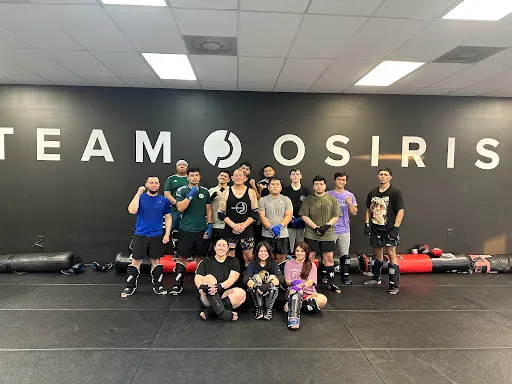
Team Osiris Martial Arts builds its training around MMA, Muay Thai, boxing fundamentals, and self-defense work, all running under one structured program. Sessions start with stance and movement drills that carry across every discipline. Fighters learn how to hold range, cut angles, and reset position after exchanges before adding power or speed.
Boxing classes focus on clean mechanics. Straight punches come first, followed by hook and uppercut variations built through mitt work and heavy bag rounds. Coaches emphasize balance after every combination so students don't lose structure when fatigue sets in. Defensive training includes head movement patterns, guard recovery, and footwork drills that force constant repositioning.
Muay Thai sessions shift the pace. Elbows and knees enter the mix, along with clinch control that demands close-range strength and control. Pad rounds simulate real exchanges, especially transitions from striking into clinch entries. Fighters learn how to maintain pressure without overcommitting, using short bursts instead of long combinations.
MMA classes connect everything. Striking entries flow into takedowns, and takedowns lead into ground control or quick resets back to standing. Students drill transitions repeatedly so reactions become automatic under pressure. Sparring rounds rotate between stand-up only, grappling start positions, and full MMA scenarios.
Self-defense training focuses on real-world situations rather than sport rules. Students practice handling grabs, wall pressure, and sudden contact from close range. Emphasis stays on escape and control rather than prolonged engagement.
The training environment keeps beginners and experienced fighters in the same space, but intensity scales by partner matching and supervision. Coaches guide every round with direct corrections, especially during sparring and high-pressure drills. Progression comes from repetition, not isolated advanced sessions.
5.0 stars (333 reviews)
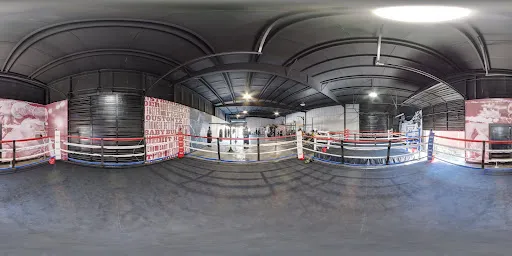
Baby Bull Boxing centers on group-based boxing fitness inside a large warehouse-style facility designed for high output training. The layout keeps heavy bags, open floor space, and conditioning stations within a single continuous workout zone. Classes follow a structured format where movement rarely stops for long breaks.
Each session starts with a warm-up built around footwork, shadowboxing, and mobility drills. Trainers immediately move into boxing combinations that repeat across rounds, often starting with simple jab-cross patterns before expanding into hooks, uppercuts, and defensive movement. The repetition builds rhythm and coordination rather than fight strategy.
Bag rounds dominate the training structure. Members rotate through timed intervals where they throw combinations at pace, focusing on endurance and consistency. Coaches call out sequences that sync the entire class, creating a shared tempo across the room. Between rounds, conditioning exercises like burpees, core work, and sprint intervals maintain intensity.
Technique instruction stays accessible. Coaches correct stance, punch alignment, and breathing while keeping explanations short. The goal is execution under fatigue rather than detailed technical breakdowns. Over time, members develop better timing, shoulder endurance, and cardiovascular capacity.
The gym attracts a wide mix of participants. Some come for weight loss, others for stress relief or general fitness. Training does not require sparring or competitive experience, which keeps the barrier to entry low. Still, boxing fundamentals remain present in every class, especially in guard position and punch mechanics.
Sessions end with conditioning blocks that push output when energy levels drop. Core work and full-body circuits finish the workout with sustained effort, reinforcing stamina under fatigue.
Ground Savage Brazilian Jiu-Jitsu (Brownsville)
5.0 stars (328 reviews)
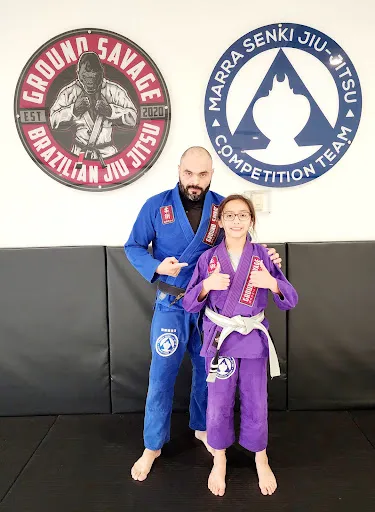
Ground Savage Brazilian Jiu-Jitsu focuses on grappling and MMA-style ground fighting built around control, positioning, and submission chains. Training starts from the ground up—literally—with movement drills that teach posture, base, hip movement, and how to stay stable under pressure. Students spend a large portion of early training learning how to escape bad positions before attempting submissions.
Fundamental classes cover closed guard, open guard, side control, mount, and back control. Each position gets broken into specific tasks: how to hold it, how to escape it, and how to transition to the next dominant position. Coaches emphasize repetition, with partners cycling through drills until movements become automatic rather than reactive.
Live rolling forms the core of progression. Students spar from both neutral starts and disadvantageous positions, forcing constant problem-solving under resistance. The pace changes depending on experience level, but every round prioritizes control and timing over strength. Beginners often start with positional sparring before moving into full rounds.
MMA integration appears through takedown entries and ground-to-striking transitions. Students learn how to close distance safely, secure clinch positions, and bring opponents to the mat without exposing themselves to counters. Once on the ground, the focus shifts immediately to control and advancement rather than holding static positions.
Conditioning work stays closely tied to grappling demands. Grip strength, core endurance, and hip mobility get trained through repetition-heavy drills and extended sparring rounds. Fatigue management becomes part of the learning process since grappling rewards efficiency more than explosiveness.
The training room maintains a focused atmosphere. Instruction runs step-by-step, with coaches correcting positioning during live rounds instead of waiting for class breaks. Students progress through structured levels, but higher belts regularly train alongside beginners, creating constant exposure to different styles and pressure levels.
Self-defense principles appear in stand-up entries and escape scenarios. Students practice handling grabs, pressure against walls, and situations where space is limited. The emphasis stays on gaining control quickly rather than exchanging strikes.
APEXINTENSITY 24 HOUR GYM Strength & Conditioning // Boxing (Pearland)
5.0 stars (320 reviews)
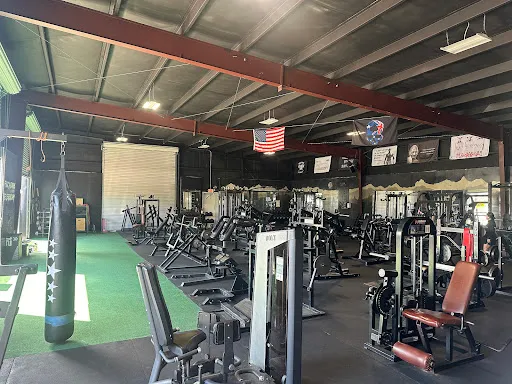
APEXINTENSITY combines boxing training with strength and conditioning inside a 24-hour facility built for constant access and flexible scheduling. The structure supports two parallel tracks: coached boxing classes and independent training sessions that run throughout the day and night. Members shift between both depending on goals, whether skill development, fitness, or athletic performance.
Boxing instruction centers on fundamentals that carry across all levels. Stance work anchors every session, followed by straight punch mechanics, hook and uppercut development, and defensive movement such as slipping and rolling under pressure. Coaches break combinations into short sequences that repeat across rounds, reinforcing accuracy before speed. Heavy bag work plays a central role, with structured intervals that build both timing and endurance.
Strength and conditioning work runs alongside boxing. Training stations include resistance exercises, sprint intervals, core circuits, and explosive movement drills. These sessions target power output, recovery speed, and overall athletic durability. Boxing rounds often sit between conditioning blocks, forcing transitions from fatigue into technical execution.
The 24-hour access changes training habits. Some members follow structured group classes, while others build solo routines focused on repetition or conditioning goals. The layout supports both styles without separating them into different areas. This creates a steady flow of activity across the facility at all hours.
Coaching remains direct and form-focused. Trainers correct posture, punch alignment, and breathing patterns during live rounds. Instead of long explanations, adjustments happen in real time while members are actively working. Progress comes from repetition across high-volume sessions.
The gym attracts a mix of fitness-focused members and competitive trainees. Beginners use boxing classes to build coordination and conditioning, while advanced members incorporate strength cycles and high-intensity rounds for performance goals. Sparring, when included, stays structured and controlled, with emphasis on timing and defense rather than volume.
5.0 stars (252 reviews)
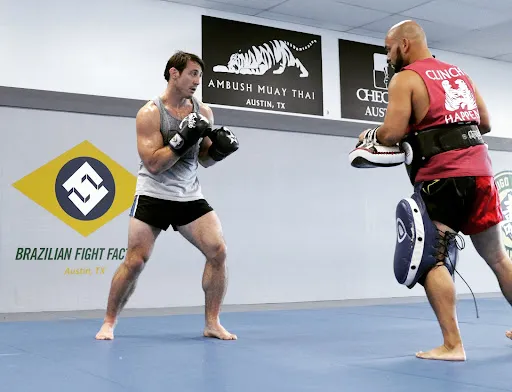
Ambush Muay Thai centers its training on striking built from Muay Thai fundamentals, with structured classes that cover punches, kicks, knees, elbows, and clinch fighting. Every session starts with stance work and movement patterns that control distance. Students learn how to stay balanced while switching between long-range kicks and short-range clinch exchanges.
Pad work forms the backbone of striking development. Coaches call combinations that link multiple weapons in sequence, often mixing boxing hands with low kicks, teeps, and elbows. Timing matters as much as power, so rounds emphasize rhythm changes—fast bursts followed by controlled resets. Heavy bag rounds reinforce repetition and conditioning under fatigue.
Clinch training separates Muay Thai from most striking systems. Students work hand fighting, neck control, off-balancing, and knee strikes from close range. Drills focus on maintaining posture while breaking an opponent's structure, followed by controlled sparring where clinch positions are held for extended exchanges. This builds endurance in tight spaces where movement is limited.
Kickboxing and MMA classes add variation. Kickboxing sessions reduce clinch reliance and increase striking volume, while MMA training connects stand-up striking to takedowns and ground transitions. Students learn how to defend entries, sprawl under pressure, and reset back into striking range without losing position.
Conditioning runs through every class. Sessions include interval rounds, sprint-based drills, and bodyweight circuits designed to simulate fatigue during sparring. The goal stays consistent: maintain technique even when breathing and timing start to break down.
Sparring remains structured and controlled. Beginners focus on light technical exchanges, while advanced students work timing, counter-striking, and clinch endurance. Coaches monitor intensity closely and adjust pairings to keep training productive rather than chaotic.
Self-defense elements appear in situational drills, especially around close-range pressure and sudden engagement. Students practice breaking grips, creating space, and exiting safely when needed.
Ambush Muay Thai attracts both hobbyists and competitive fighters. Some train for fitness and skill development, others prepare for amateur and professional bouts. The system supports both paths without separating them into isolated programs.
SandersFit Performance Center (Dallas)
5.0 stars (221 reviews)

SandersFit Performance Center builds training around boxing performance and athletic conditioning, blending technical skill work with structured strength development. Sessions run with a clear focus on measurable progress in speed, power, and endurance. The gym draws a mix of competitive fighters and athletes who treat boxing as part of broader performance training.
Boxing instruction starts with fundamentals: stance stability, foot placement, and straight punch mechanics. Coaches refine jab control and defensive positioning before layering in hooks, uppercuts, and combination work on mitts and bags. Each round carries a defined purpose—accuracy, timing, or output—rather than free-form repetition.
Mitt work plays a central role. Coaches set pace, call counters, and force reactions that simulate fight rhythm. Fighters learn to reset after every exchange, maintaining balance instead of chasing volume. Heavy bag rounds reinforce repetition but stay structured around specific goals such as power generation or endurance under fatigue.
Conditioning work separates SandersFit from standard boxing gyms. Training includes sprint intervals, resistance circuits, plyometric drills, and strength exercises built around explosive movement. These sessions often sit alongside boxing rounds, forcing athletes to switch between high-output conditioning and technical execution without losing form.
Athletes preparing for competition follow tailored training cycles. Workload shifts based on fight timelines, with higher-intensity sparring and sharper technical rounds closer to events. Off-camp training focuses more on strength maintenance and controlled technical refinement.
Sparring stays organized and closely supervised. Coaches match partners by skill level and objective, controlling intensity to keep sessions productive. The focus remains on timing, defensive awareness, and ring control rather than extended exchanges.
The environment stays performance-oriented without separating recreational members from competitive athletes. Beginners work through fundamentals at a slower pace, while advanced trainees push conditioning and technical precision in the same space.
SandersFit's structure creates a direct link between boxing skill and athletic output. Every drill ties back to how a fighter moves, reacts, and performs under pressure.
Dallas Fight Club & Fitness (Dallas)
5.0 stars (207 reviews)
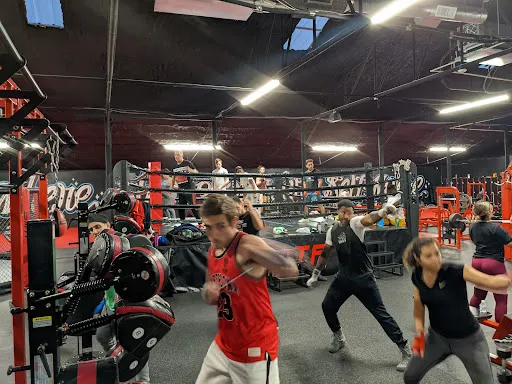
Dallas Fight Club & Fitness centers its training on traditional boxing mechanics supported by kickboxing and fitness-based conditioning. Sessions follow a structured rhythm built around stance discipline, punch accuracy, and controlled defensive movement. Every class reinforces repeatable fundamentals rather than unstructured volume.
Boxing instruction starts with footwork patterns that establish balance and ring control. Students drill forward, backward, and lateral movement before adding punch combinations. Coaches break combinations into short sequences—jab setups, cross entries, hook variations, and uppercut finishes—so each movement stays clean under repetition.
Mitt work serves as a key training tool. Coaches set tempo, call combinations, and force defensive responses between exchanges. Fighters learn how to reset stance after each sequence instead of drifting out of position. Heavy bag rounds reinforce the same mechanics with added endurance demands, often structured around timed intervals.
Defensive training receives equal attention. Sessions include slipping drills, roll-unders, parry work, and guard recovery under pressure. These exercises build awareness of distance and timing, especially when transitioning between offense and defense without pause.
Kickboxing classes expand the striking system. Kicks add range control and force students to adjust stance width and hip rotation. This changes timing in combinations and introduces different defensive responsibilities, especially against low kicks and body shots.
Sparring follows a controlled structure. Beginners participate in light technical rounds focused on distance management and basic exchanges. Advanced groups work timing, counterpunching, and ring control with higher pace but still under coach supervision. Safety and progression guide every round.
Fitness boxing classes run alongside technical sessions. These workouts combine boxing combinations with conditioning circuits such as core work, sprint intervals, and bodyweight exercises. The goal is sustained output across rounds while maintaining form under fatigue.
The gym environment supports both casual members and fighters. Beginners build coordination and conditioning through repetition, while experienced athletes refine timing and defensive reactions in more demanding sessions.
5.0 stars (199 reviews)

Box-Up Nation focuses on boxing fitness built around group training and repetition-based skill development. Classes run in a structured format where members cycle through timed rounds of combinations, bag work, and conditioning stations. The pace stays steady, with little downtime between drills, keeping heart rate elevated throughout the session.
Training starts with warm-ups built around shadowboxing, footwork patterns, and mobility work. Coaches establish stance, guard position, and basic punch mechanics before moving into combination work. Most classes rely on short, repeatable sequences such as jab-cross, jab-cross-hook, and layered variations that build coordination through volume.
Heavy bag rounds form the core of the workout. Members rotate through timed intervals where they repeat coached combinations while maintaining rhythm and form under fatigue. The focus stays on consistency—clean punches, stable stance, and controlled breathing across multiple rounds.
Coaches guide sessions with clear, simple instruction. Corrections happen during movement rather than long breaks, keeping participants active while adjusting technique in real time. The emphasis stays on accessibility, allowing beginners to follow along while still challenging more experienced members through pace and repetition.
Conditioning work sits between boxing rounds. Exercises include core circuits, sprint intervals, push-ups, and bodyweight movements designed to maintain intensity without breaking flow. These transitions keep the workout continuous rather than segmented into separate training blocks.
Technical sparring is not the focus. Instead, the gym builds boxing familiarity through repetition, timing drills, and controlled partner exercises. Members develop coordination, endurance, and comfort with basic boxing movements rather than competition-level strategy.
The environment stays group-driven. Music, synchronized rounds, and coach-led pacing create a collective training rhythm that pushes consistency. Members feed off the group structure, which keeps energy high from start to finish.
Box-Up Nation suits people who want boxing-style fitness without the demands of fight preparation. Progress shows up through improved stamina, cleaner combinations, and better movement efficiency across repeated sessions.
Koulikov Grappling Academy (Edinburg)
5.0 stars (192 reviews)
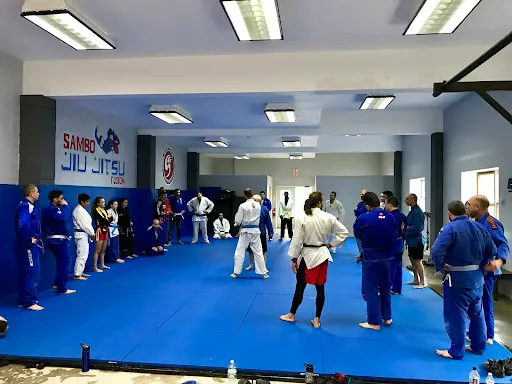
Koulikov Grappling Academy focuses on grappling-based MMA training built around control, submissions, and positional dominance. Classes start with movement drills that teach balance, posture, and safe transitions between positions. Students learn how to stay stable under pressure before attempting submissions or advanced attacks.
Fundamentals cover guard retention, guard passing, side control, mount, and back control. Each position gets broken into clear objectives: escape, hold, or advance. Repetition drives progress, with partners cycling through structured drills until movements become automatic rather than reactive.
Takedown training plays a major role in MMA classes. Students work entries from clinch range, level changes, and body control to bring opponents to the mat. Once grounded, the focus shifts immediately to maintaining top position or recovering guard, depending on the scenario.
Live rolling forms the core of development. Students spar from neutral starts, disadvantage positions, and fully open rounds. Pressure increases with experience, but the goal stays consistent: control space, manage timing, and stay efficient under resistance. Beginners often start with positional rounds before moving into full sparring sessions.
Striking integration appears in MMA-focused sessions. Fighters learn how to close distance safely, defend strikes during entries, and transition from stand-up exchanges into clinch control. Ground work follows immediately after, emphasizing continuity rather than isolated techniques.
Conditioning comes from repetition and sustained grappling rounds. Grip strength, hip movement, and core endurance develop through extended sparring and drilling cycles. Fatigue becomes part of the training, forcing students to make decisions under physical strain.
Coaching stays hands-on during live work. Adjustments happen mid-roll, with instructors correcting posture, weight distribution, and positioning in real time. The training room maintains a focused, disciplined atmosphere where consistent repetition drives improvement across all levels.
Houston Colosseum Academy (Houston)
5.0 stars (186 reviews)
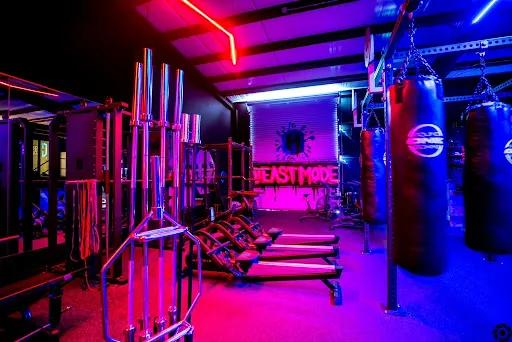
Houston Colosseum Academy centers its training on traditional boxing fundamentals supported by fitness-oriented conditioning. Sessions build from the ground up, starting with stance alignment, foot placement, and guard discipline. Students learn how to stay balanced while moving forward, backward, and laterally before adding combinations.
Boxing instruction focuses on clean mechanics. Jab development anchors most drills, followed by cross work, hook variations, and controlled uppercut entries. Coaches break combinations into short sequences that repeat across rounds so movement becomes consistent under fatigue rather than rushed or sloppy.
Mitt work plays a major role in skill development. Trainers call combinations, correct timing, and force defensive resets between exchanges. Each round has a specific purpose—accuracy, speed control, or endurance—so students learn how to adjust output depending on the task.
Heavy bag training reinforces repetition. Fighters work timed rounds where they maintain structure while increasing output. Emphasis stays on breathing control, guard recovery after combinations, and staying planted rather than drifting during fatigue.
Defensive training includes slipping, rolling, parrying, and footwork-based escapes. Students practice staying outside of punching range, then re-entering with controlled combinations. These drills build awareness of distance and timing without relying on reaction speed alone.
Fitness boxing classes run alongside technical sessions. These workouts combine boxing combinations with conditioning circuits such as core work, bodyweight exercises, and interval training. The structure keeps intensity high while still reinforcing basic boxing mechanics.
Sparring, when introduced, stays controlled and level-based. Beginners focus on light technical exchanges, while advanced students work timing, defense, and ring control in structured rounds. Coaches manage intensity to keep development consistent and safe.
The gym environment supports both casual members and those interested in deeper boxing skill development. Beginners gain coordination and conditioning through repetition, while more experienced trainees refine timing, defense, and endurance through structured training cycles.
Explore More Gyms in Texas
Browse all boxing gyms in Texas with filters by city and training style.
View All Texas Gyms